

A Group of State Department Announcers Huddle around the Microphone after the Initial Shortwave Broadcast in Russian to Russia from New York City, February 17, 1947, Voice of America
American art forms were well enjoyed abroad. The Voice of America, a radio station broadcast behind the Iron Curtain sharing American music to strong jazz fans present around the world.
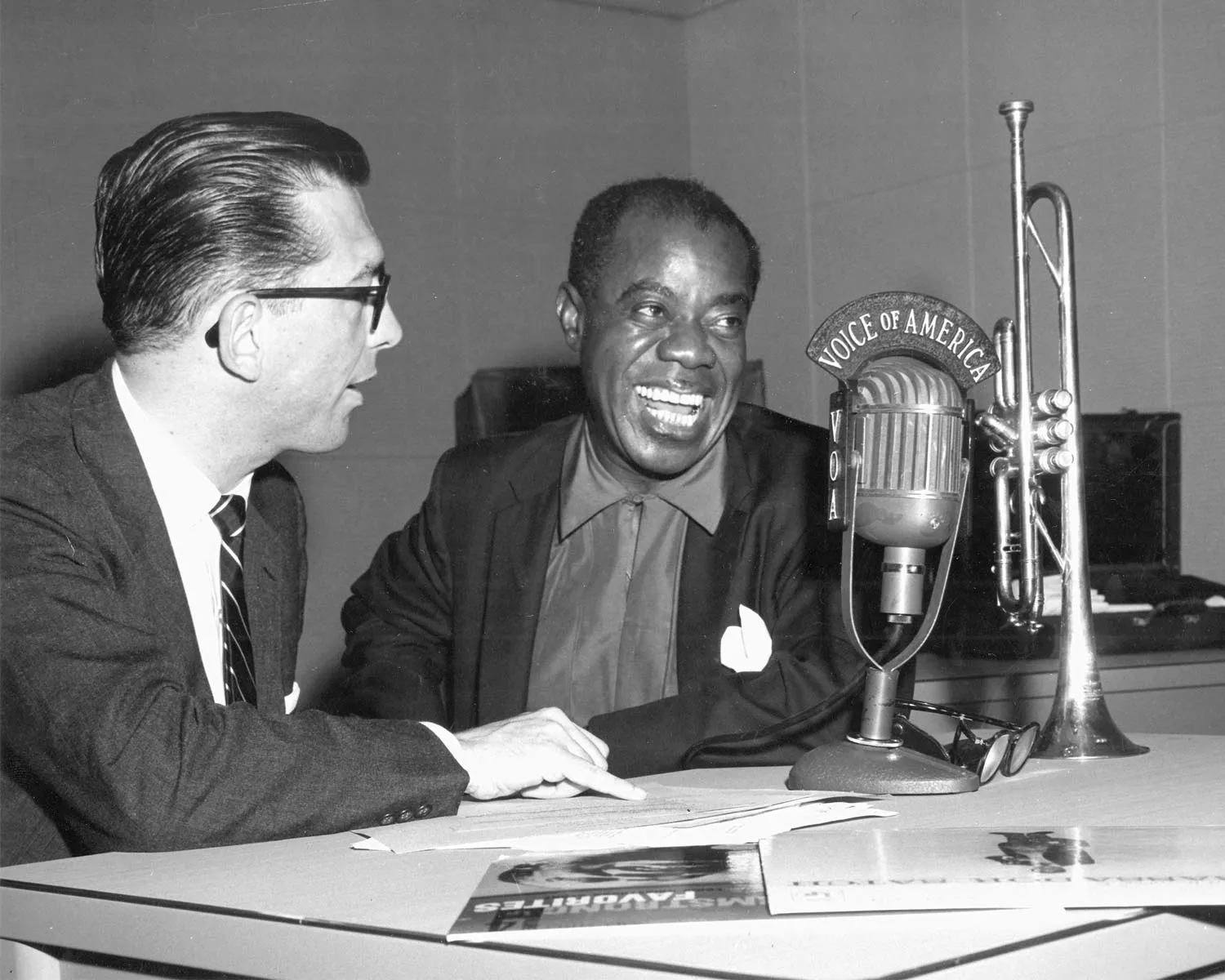
Willis Conover (left) Interviewing Louis Armstrong for the Voice of America, 1955, Britannica
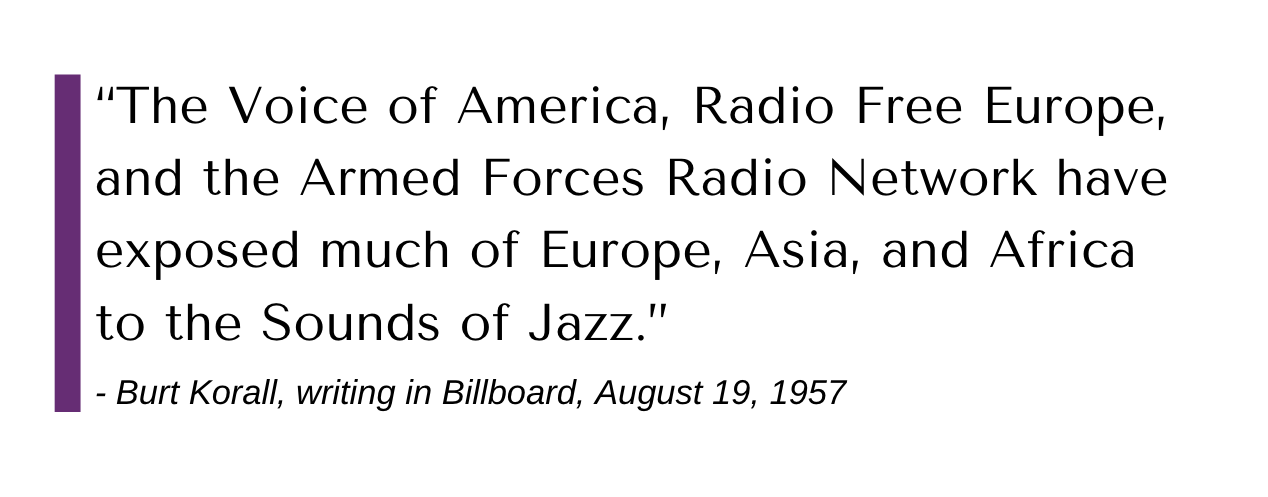
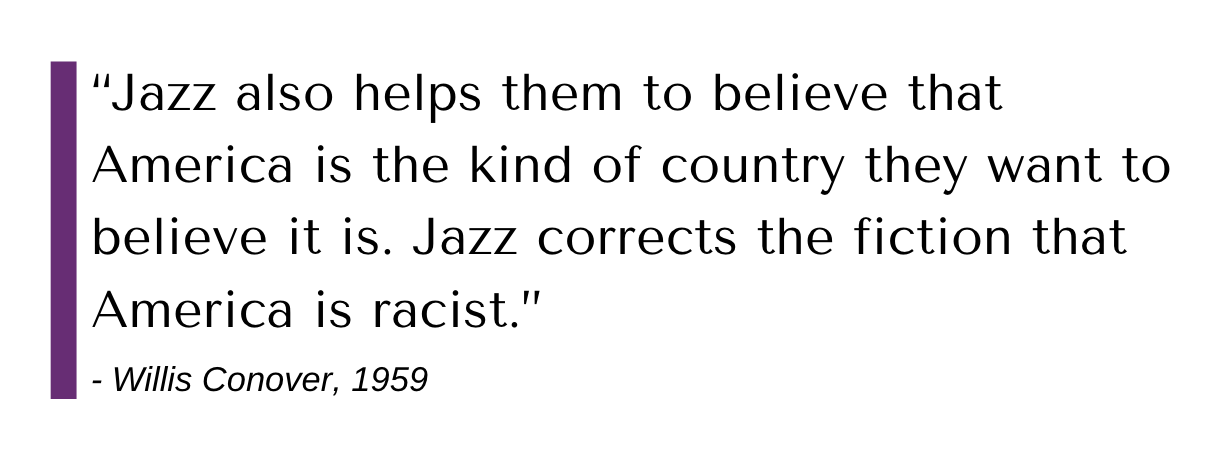
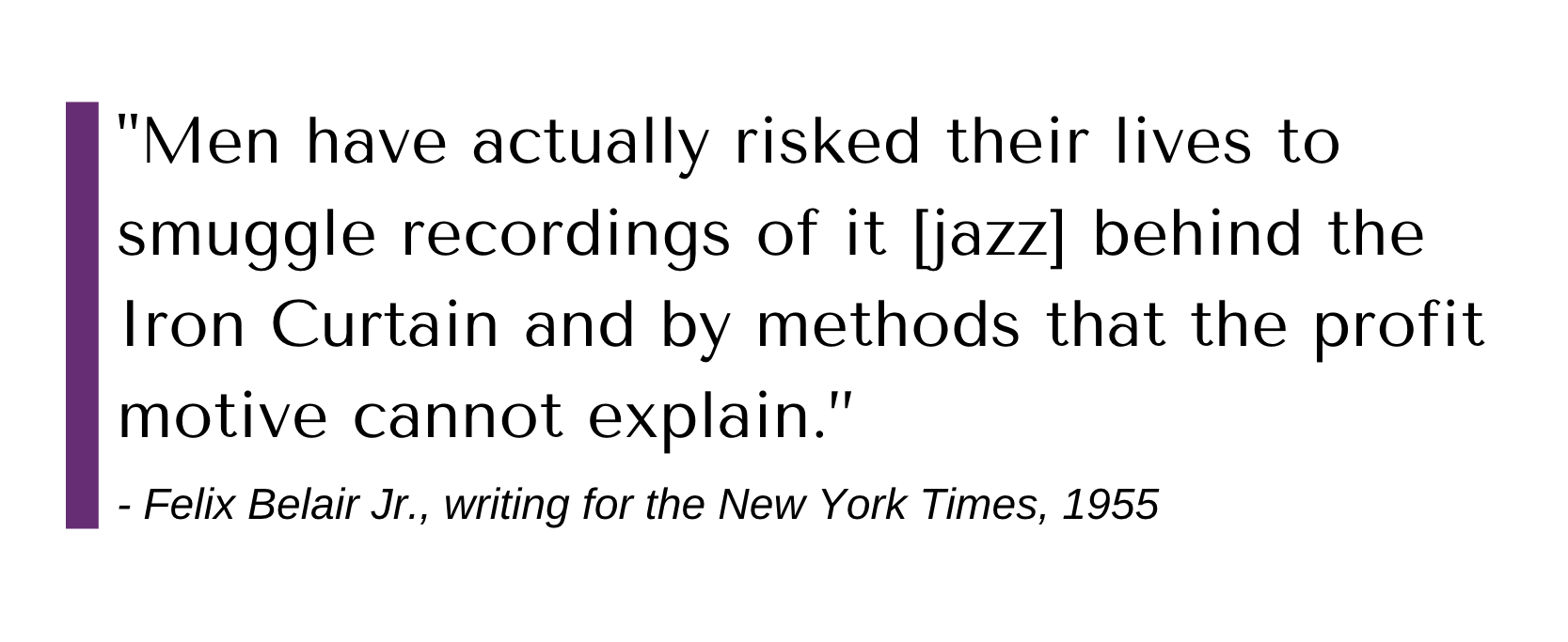
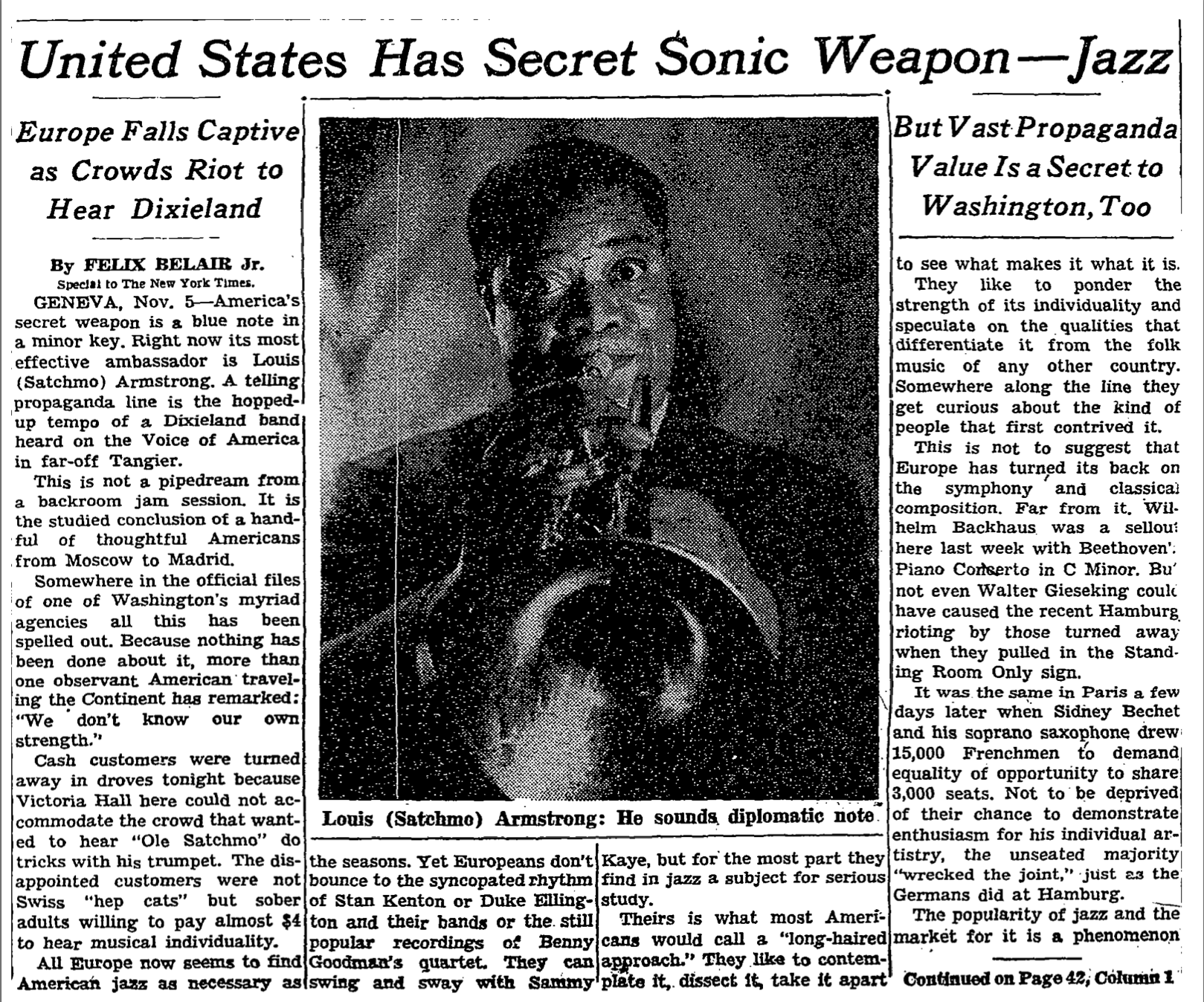
New York Times, November 6, 1955
In 1955, Adam Clayton Powell Jr., an African-American congressman from Harlem, proposed jazz as an option for cultural presentations. He believed that jazz alone could represent American values of democracy and show the strength of its culture. Powell also saw an opportunity to boost civil rights at home.
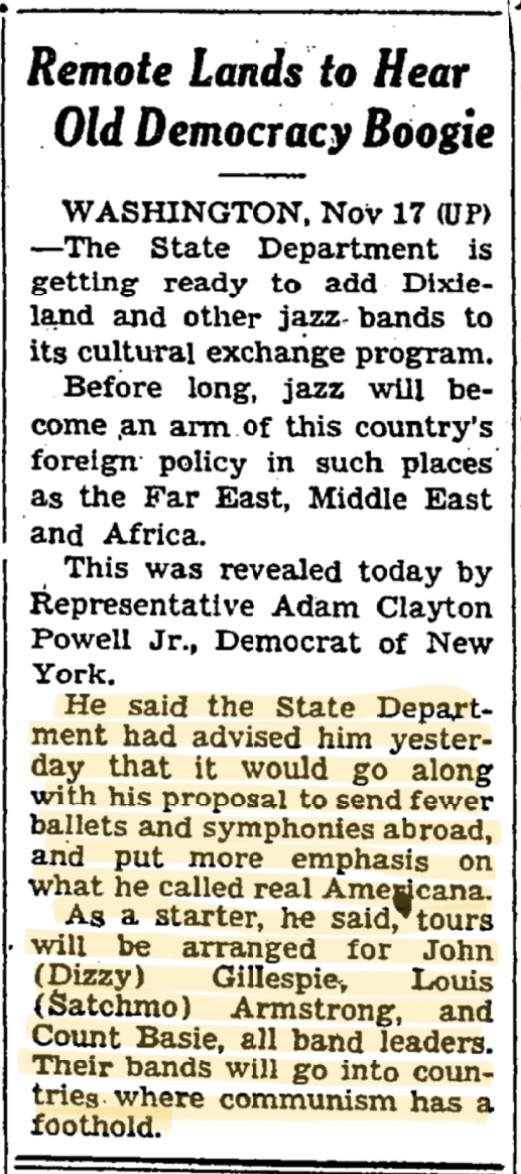
November 18 1955, The New York Times
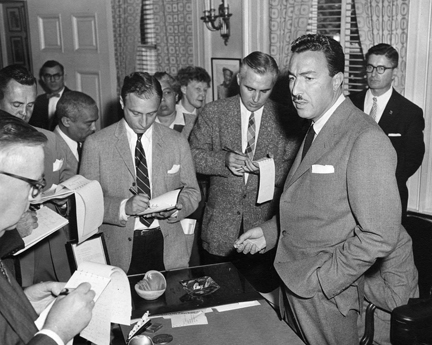
Congressman Adam Clayton Powell During a Press Conference, October 11, 1956,
Dwight D. Eisenhower Presidential Library
The Eisenhower administration seized the change to combat negative perceptions of America by sending integrated groups abroad. In a sign of commitment to promoting American culture abroad, Congress passed the International Cultural Exchange and Trade Fair Participation Act on February 21, 1956.
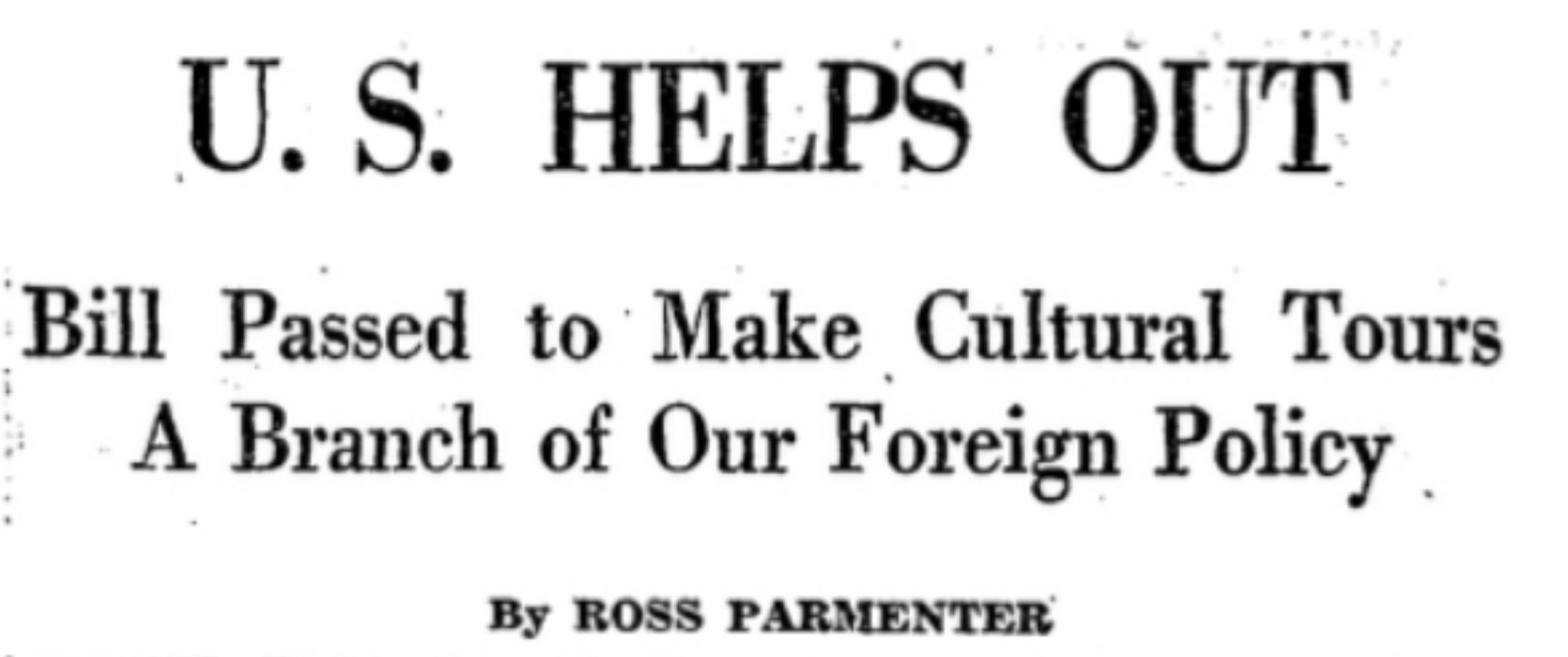
New York Times. August 5, 1956
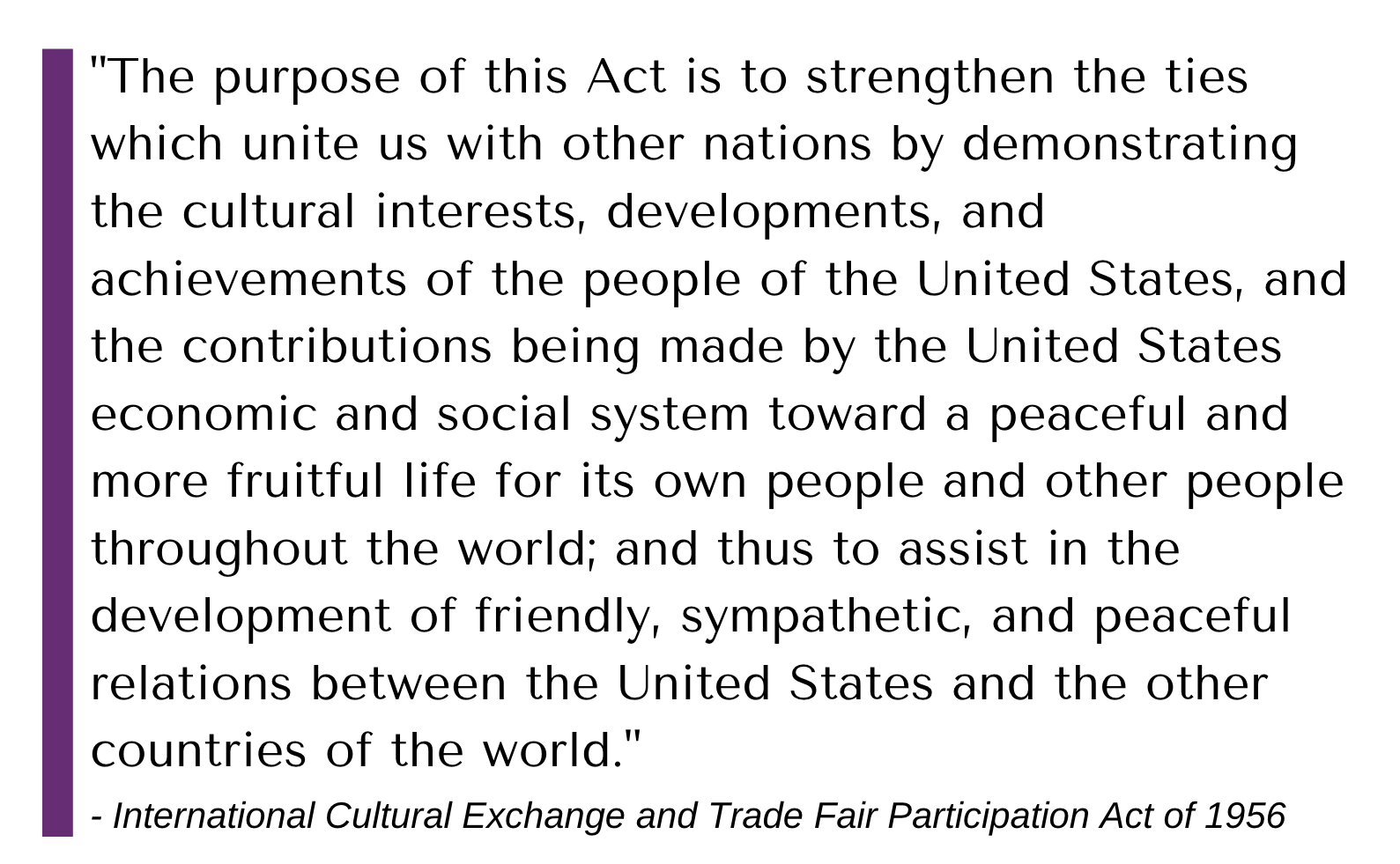
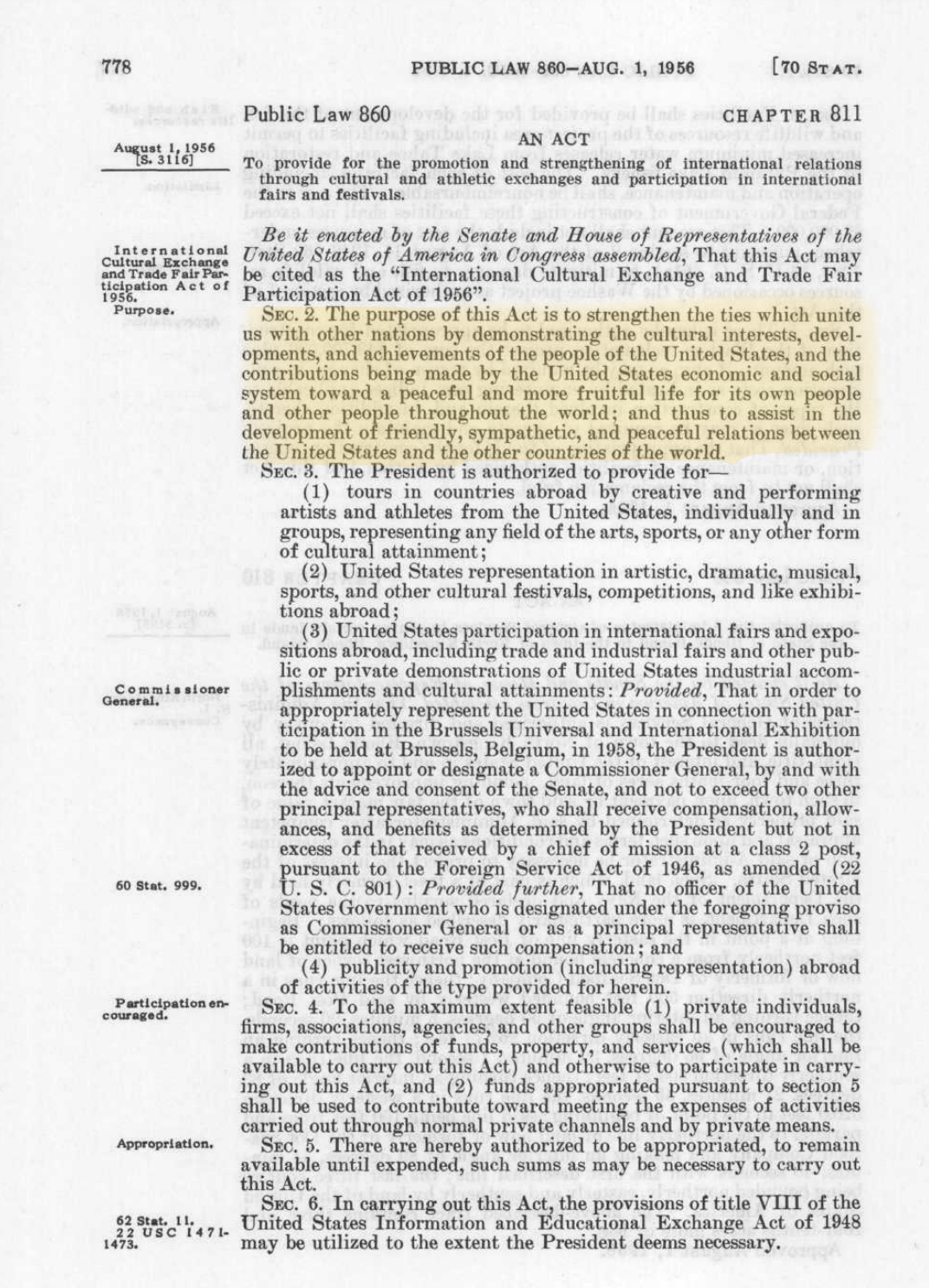
International Cultural Exchange and Trade Fair Participation Act of 1956
Even so, sharp criticism arose to the tours from American officials and citizens who believed that the jazz would make fools out of America rather than cultural stars.
